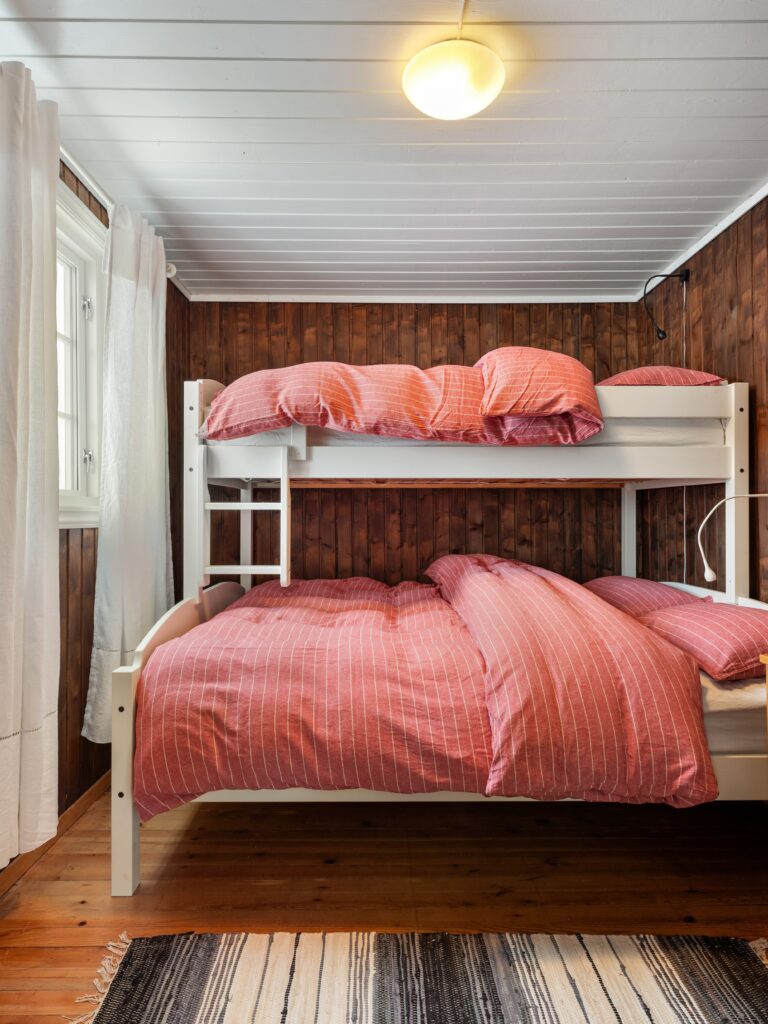
If you’re looking for the best bunk beds for kids, finding the right one involves more than simply choosing a design your child likes. Safety, durability, mattress size, available space, and ease of access are all important factors to consider.
In this guide, we’ll look at some of the top bunk beds for children in 2026 and what makes each one a good choice, whether you’re furnishing a shared bedroom, maximizing a small space, or looking for a practical sleeping solution that can grow with your family
Why Bunk Beds Are a Smart Choice
Bunk beds do more than just look fun, they free up valuable floor space in shared bedrooms, making room for a desk, play area, or extra storage. They’re also a practical option for growing families, guest rooms, or homes that host sleepovers regularly.
What to Look for in a Kids’ Bunk Bed
Safety certifications. Look for bunk beds that meet current safety standards, including secure guardrails on the top bunk, a sturdy ladder or stairs, and slats (not just a bare frame) to support the mattress.
Age recommendations. Most safety guidelines recommend children be at least 6 years old before sleeping on the top bunk, since younger kids are more prone to rolling off during sleep.
Weight capacity. Check the manufacturer’s listed weight limit for each bunk, especially if older kids or teens will be using the top bed long-term.
Material.
- Solid wood, most durable, sturdiest option, typically higher price point.
- Metal frames, lightweight, budget-friendly, and often more modern-looking, though they can be less sturdy over time.
- Engineered wood, a middle ground on price and durability, but check the weight rating carefully.
Mattress size compatibility. Confirm whether the frame is built for twin, twin XL, or full-size mattresses, this varies quite a bit between models and affects both cost and mattress shopping later.
Convertibility. Many modern bunk beds can separate into two standalone twin beds later, which is a big plus as kids grow or room needs change.
Ladder vs. stairs. Stairs are generally safer and easier for younger kids to use, and some include built-in storage drawers in each step, a nice bonus for smaller rooms.
Best Bunk Beds by Category
1. Best Overall
A solid wood bunk bed with full guardrails on all sides of the top bunk, a sturdy integrated ladder, and slat support (no box spring needed). This is the safest, most durable all-around option for most families.
2. Best for Small Rooms
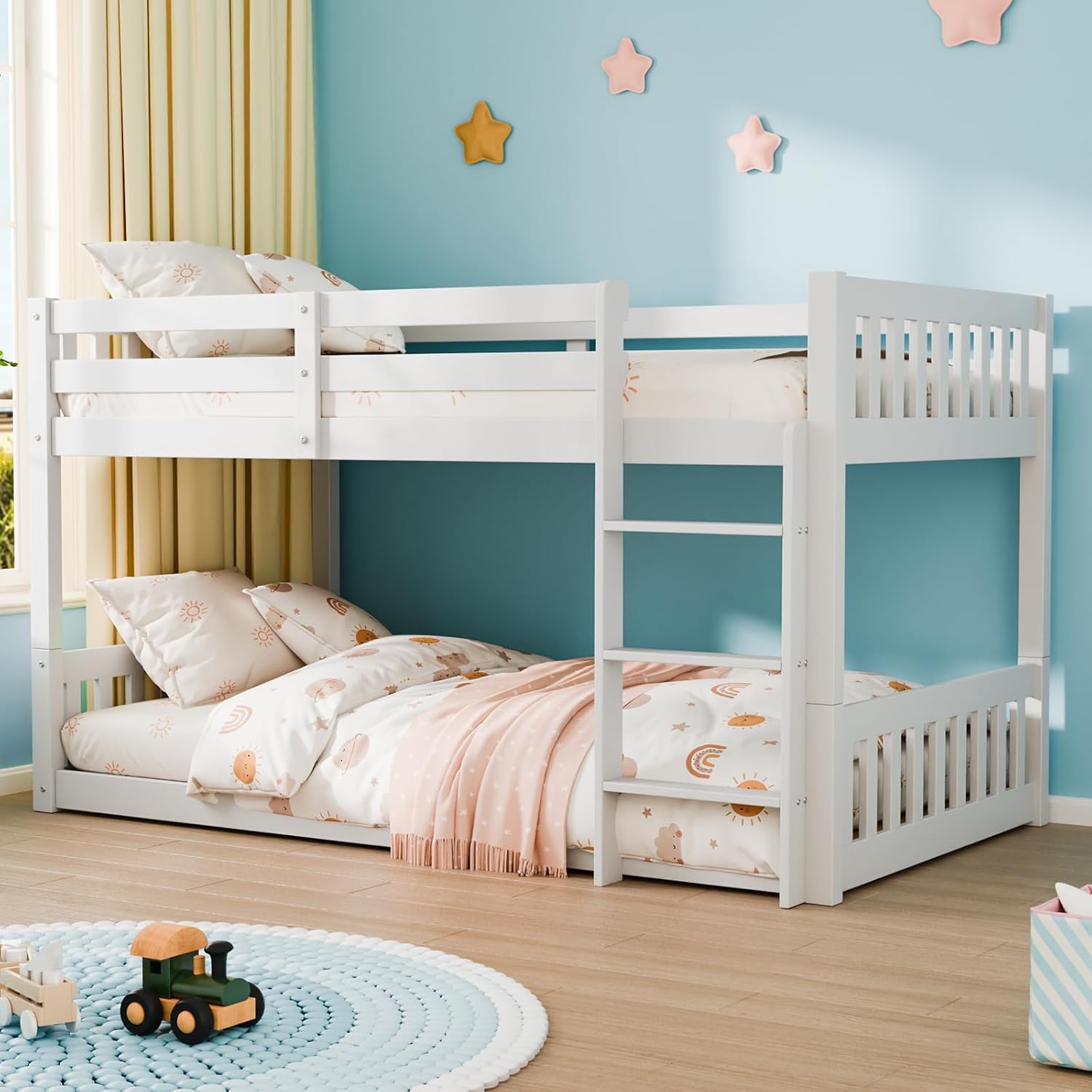
A twin-over-twin bunk bed with a compact footprint, ideally with an angled ladder that tucks against the frame rather than protruding into the room.
3. Best with Storage
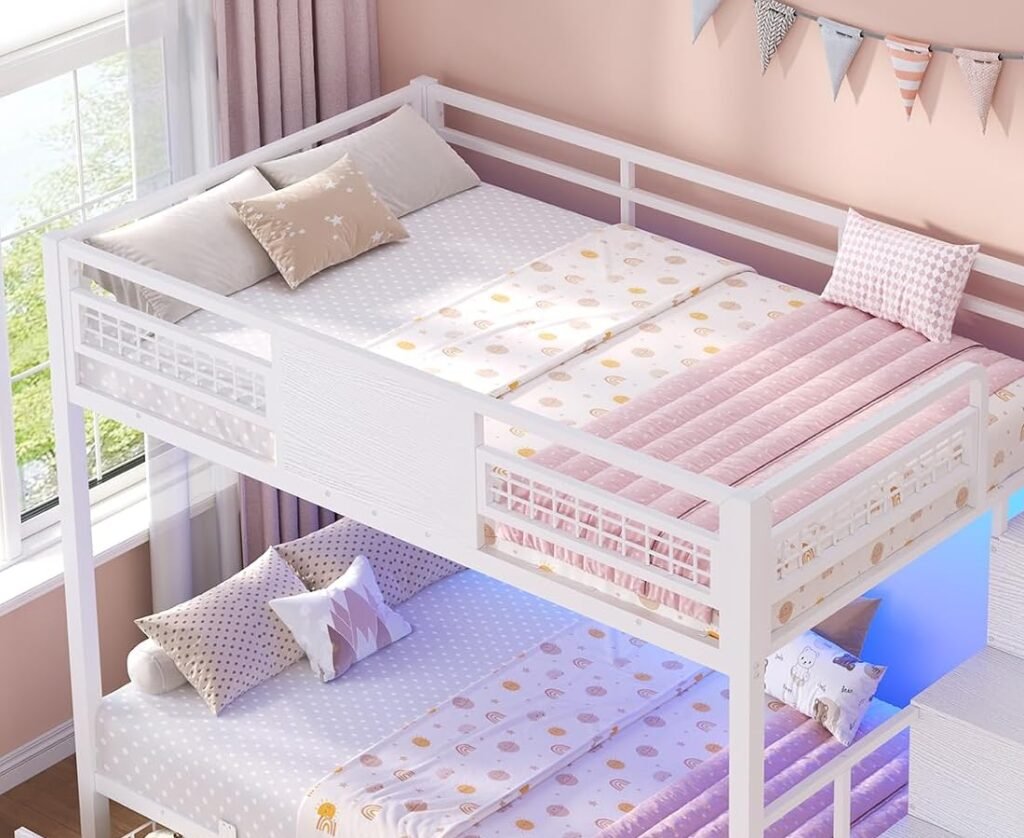
A bunk bed with built-in stairs that double as drawers, or a design that includes under-bed storage drawers or shelving on the end, ideal for kids’ rooms where closet space is limited.
4. Best Convertible
A bunk bed designed to split into two separate twin beds, giving you flexibility as your kids grow older or move into their own rooms.
5. Best for Older Kids/Teens
A full-over-full or twin-over-full bunk bed with a higher weight capacity on both bunks, since standard twin-over-twin frames may feel cramped for taller or older children.
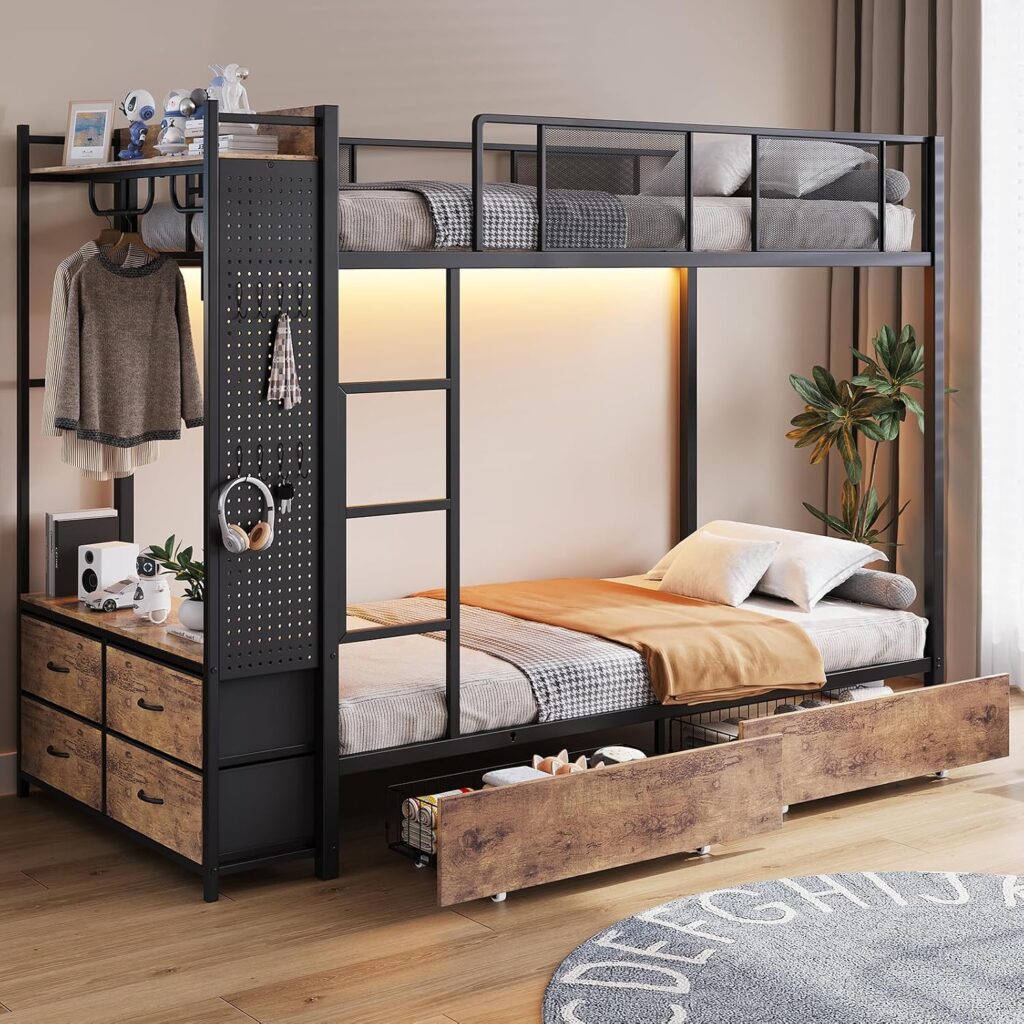
Best Budget Pick
A metal-frame bunk bed that still meets safety standards with full guardrails and slat support, at a lower price point than solid wood options. A good choice for guest rooms or occasional use.
6. Best for Sleepovers/Multiple Kids
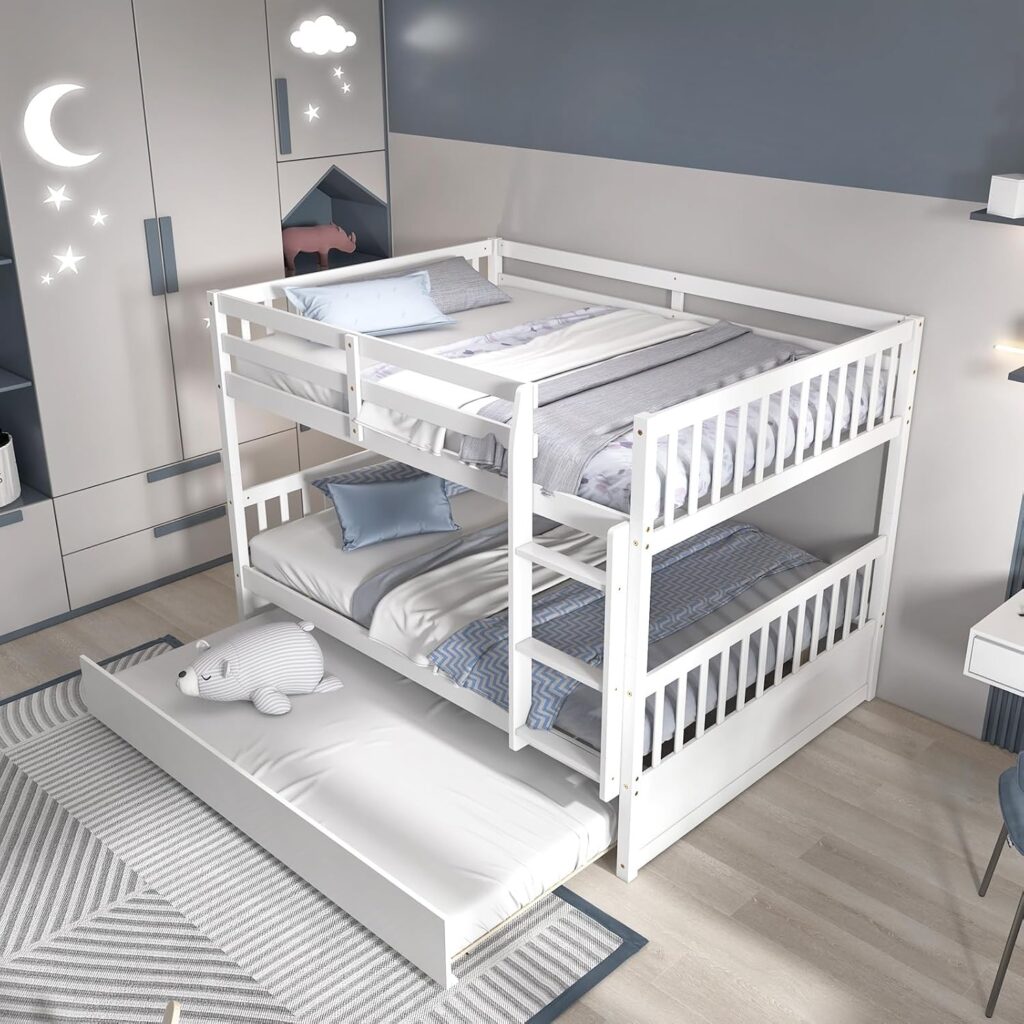
A bunk bed with a trundle, a pull-out third bed underneath, which sleeps three kids in the same footprint as a standard bunk bed.
Bunk Bed Safety Checklist
- Guardrails on all sides of the top bunk (not just the wall side)
- Ladder or stairs securely attached to the frame
- Slats spaced properly to support the mattress (check manufacturer spacing guidelines)
- Weight capacity clearly listed for each bunk
- No gaps larger than 3.5 inches in guardrails or frame (a common safety standard to prevent entrapment)
- Mattress sized correctly for the frame, with no excess gap between mattress and guardrail
Frequently Asked Questions
What age is appropriate for bunk beds? Children using the top bunk should generally be at least 6 years old, per common safety guidelines, since younger kids are at higher risk of falling.
Are bunk beds safe for kids? Yes, when they meet current safety standards, full guardrails, secure ladders or stairs, proper slat support, and correct mattress sizing all matter for safety.
What’s the difference between twin, full, and twin XL bunk beds? Twin is the most common and compact size for kids. Full offers more room for older kids or teens. Twin XL is longer than standard twin and works well for growing kids who need more legroom without the extra width of a full.
Do bunk beds need a box spring? Most modern bunk beds use slatted frames that support the mattress directly, so a box spring typically isn’t needed or recommended.

